What happens in a Reiki session, and has it been shown to do anything? In Reiki, a practitioner rests their hands lightly on, or just above, a clothed person, usually for 20 minutes to an hour. Researchers have measured pain, anxiety, mood and heart rate during and after sessions.
Guo and colleagues' 2024 meta-analysis of 13 trials reported less anxiety after Reiki. Most of its trials compared Reiki with rest or usual care, and only one used a sham. Assefi and colleagues' 2008 NIH-funded sham-controlled trial, of 100 adults with fibromyalgia, found no effect on pain. NCCIH, the US National Center for Complementary and Integrative Health, says Reiki "hasn't been clearly shown to be effective for any health-related purpose."
We rate the research Early for anxiety and pain, because the trials disagree. Studies have measured how people felt and their heart rate, not the energy practitioners describe.
What is Reiki, and where does it come from?
Reiki comes from Japan. Practitioners credit Mikao Usui as its founder. The UC Santa Barbara Library, which holds the papers of an early teacher, credits Usui with introducing Reiki in Japan in 1922.
In the tradition's own account, Usui was a spiritual seeker who fasted for 21 days on Mount Kurama in Japan. On the last day, practitioners say, he experienced the Reiki energy. A common rendering of the word Reiki, cited in a 2014 nursing review, is "spiritually guided life force energy."
Hawayo Takata brought the practice to Hawaii. According to her archive, she went to Japan in 1935 for medical care and studied with Chujiro Hayashi. He initiated her as a Reiki Master in February 1938. She later trained 22 masters.
Practitioners describe three levels of training. The first is for treating yourself and others by light touch. The second adds what practitioners call distance healing. The third, the master level, is for teaching and initiating others. NCCIH describes the practice as based on "an Eastern belief in an energy that supports the body's innate or natural healing abilities."
What happens during a session?
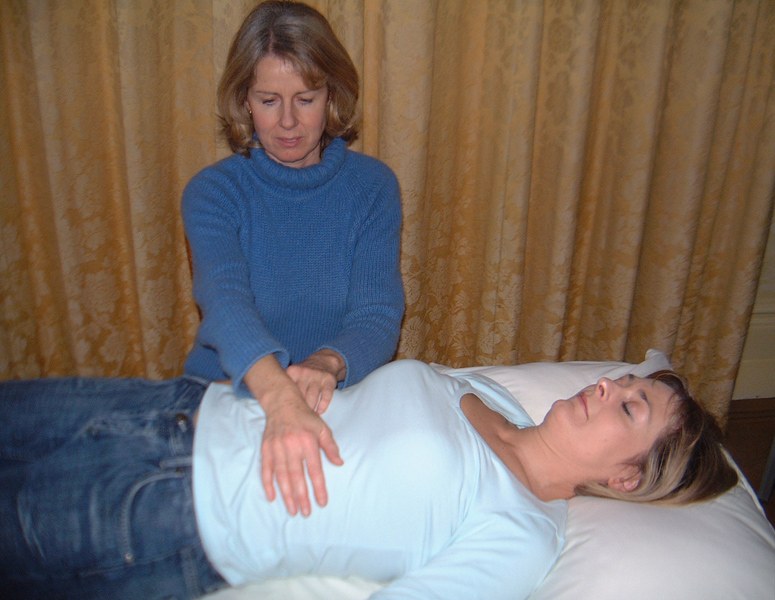
Cancer Research UK describes a typical session. You stay dressed, and usually take off your shoes and coat. You sit or lie down. The practitioner's hands rest "on, or a few inches above your body." A session usually lasts 20 minutes to an hour.
The trials give more detail. In a 2008 fibromyalgia trial, sessions lasted 30 minutes on a massage table, in a plain room without incense or music. The practitioner touched 12 positions for about 2 minutes each. They ran from the eyes and head, down the chest and back, to the feet. In seven trials reviewed in 2014, sessions ran from 25 to 90 minutes, averaging 48.
What did the research measure?
Anxiety. A 2024 meta-analysis by Guo and colleagues pooled 13 randomized trials with 824 adults. Anxiety scores were lower after Reiki, with a large average effect. The trials disagreed widely with one another. Most compared Reiki with rest or usual care, and only one used a sham session.
Cochrane reviewers looked at Reiki for anxiety and depression in 2015. They found 3 small trials, too few to combine. They concluded there was "insufficient evidence to say whether or not Reiki is useful."
Quality of life. A 2025 meta-analysis by Liu and colleagues pooled 11 trials with 661 people. It found a small improvement, with a lower bound close to zero.
Pain, against a sham. The 2008 trial by Assefi and colleagues, funded by the NIH, tested Reiki against a sham. It enrolled 100 adults with fibromyalgia for 16 sessions over 8 weeks. Some were treated by Reiki masters and some by actors trained to copy the hand positions. Some were touched and some were treated from a distance. The authors reported: "Neither Reiki nor touch had any effect on pain or any of the secondary outcomes."
A 2011 trial gave 189 chemotherapy patients Reiki, sham Reiki or standard care. Comfort and well-being rose significantly with both real and sham Reiki, and did not change with standard care. The authors credited the one-on-one presence of a nurse.
Heart rate and blood pressure. A 2004 pilot study of 45 people compared Reiki with a mock session and with rest. Heart rate and diastolic blood pressure fell more with Reiki. A 2014 study of 66 people with high blood pressure gave one 20-minute session. Pressure fell most in the Reiki group, but that group started higher. Both measured a single session, during it or just after.
Earlier reviews. In 2008, Lee, Pittler and Ernst reviewed 9 trials. They found "the evidence is insufficient to suggest that reiki is an effective treatment for any condition." A 2017 review counted 13 placebo-controlled studies: 8 favored Reiki and 5 did not. Its author is linked to an Australasian Reiki association.
Where is Reiki oversold?
Some descriptions present the energy as something a session has been shown to move. NCCIH says there is "no scientific evidence supporting the existence of the energy field thought to play a role in Reiki." The studies measured how people felt, not the energy.
A second claim is that Reiki works against disease, including cancer. Cancer Research UK says there is no scientific evidence that it can "prevent, treat or cure cancer, or any other disease."
A third is that Reiki is shown to work better than placebo. The 2008 sham-controlled trial found nothing, and in the chemotherapy trial comfort rose with sham Reiki too. A 2018 pain meta-analysis is still cited as positive, a 2022 letter by Moran noted. Its confidence interval crossed zero, a correction followed in 2021, and letters disputed its reading.
Distance Reiki is also offered. In the fibromyalgia trial, it had no effect.
Finally, a certificate can suggest a regulated qualification. NCCIH's earlier fact sheet says "No licensing, professional standards, or formal regulation exists for the practice of Reiki" in the US.
What did the trials involve?
Many of the studies we found gave a single session; the fibromyalgia trial gave 16. Single-session studies measured heart rate or blood pressure in the minutes that followed. The fibromyalgia trial gave two 30-minute sessions a week for 8 weeks. Its practitioners were three Usui-style Reiki masters with 5 to 18 years of experience.
The people studied were often hospital or clinic patients, such as people having chemotherapy or surgery. Others were older adults, students or people with chronic pain. The fibromyalgia trial excluded pregnant or breastfeeding women, people using narcotic pain medicine and anyone treated with energy medicine before.
Comparisons differed. Some trials used rest or usual care. A few used a sham, a person copying the hand positions without Reiki training. In the two larger sham-controlled trials, Assefi's and Catlin's, real and sham Reiki did not clearly differ. Two small single-session studies found larger changes with Reiki than with a mock session.
Cancer Research UK says private sessions in the UK cost about 15 to 100 pounds an hour. Some UK cancer centers and hospices offer them free or at low cost.
What do the warnings say?
NCCIH says Reiki "hasn't been shown to have any harmful effects." Its earlier fact sheet said "no serious side effects have been reported." In the reviews we read, few trials reported harms systematically; none reported a serious harm. Cancer Research UK says people with cancer should tell their doctor about it. The risk agencies name is delay. NCCIH's fact sheet said not to use Reiki "to replace proven conventional medical care or to postpone seeing a health care provider about a medical problem."
Questions to Ask Your Doctor
- Could a Reiki session fit alongside my cancer or pain treatment?
- Does this hospital offer Reiki, and who provides it?
- Are my anxiety symptoms something an established treatment should address first?
- Is there any reason light touch would be a problem for me after surgery?
Questions People Ask
Do you need to undress for Reiki?
No. Cancer Research UK says you stay dressed and usually remove only your shoes and coat. In the trials, recipients lay fully clothed on a massage table. Practitioners either rest their hands lightly on the body or hold them a few inches above it. The fibromyalgia trial compared touch with distant sessions and found no difference.
How many sessions did the studies use?
It varied. Many studies used one session and measured the minutes after it. The fibromyalgia trial used 16 sessions over 8 weeks. The 2025 quality-of-life review reported larger effects with 8 or more sessions of 60 minutes or more. That finding came from a subgroup analysis, which is weaker evidence than the main result.
Is Reiki the same as massage?
No. In Reiki, the hands rest still or above the body in a set order of positions, a 2014 nursing review says. The larger trials compared Reiki with a sham session that copied the touch, and found little difference. Massage was not one of the comparisons in the trials we read.
Is Reiki regulated?
In the US, NCCIH's fact sheet says there is no licensing or formal regulation, and no special background is needed to train. In the UK, Cancer Research UK says practitioners should be on the voluntary Complementary and Natural Healthcare Council register. It also says anyone treating patients should hold at least a Level 2 qualification.
The Spiritual hub's overview article reports research on what eight-week meditation programs were found to change. More on the Spiritual Wellness page.
Where this comes from
Sources
- Reiki. National Center for Complementary and Integrative Health, 2018. Definition; not clearly shown effective; no evidence for the energy field; no harmful effects shown
- Reiki: An Introduction (D315). National Center for Complementary and Alternative Medicine, 2012. No licensing or formal regulation; no serious side effects reported; not to replace proven care
- Guo X, Long Y, Qin Z, Fan Y. Therapeutic effects of Reiki on interventions for anxiety: a meta-analysis. BMC Palliative Care, 2024. 13 trials, 824 adults; lower anxiety; high heterogeneity; one sham-controlled trial
- Joyce J, Herbison GP. Reiki for depression and anxiety. Cochrane Database of Systematic Reviews, 2015. 3 trials; insufficient evidence
- Liu K, Qin Z, et al. Effects of Reiki therapy on quality of life: a meta-analysis of randomized controlled trials. Systematic Reviews, 2025. 11 trials, 661 people; small effect, lower bound near zero; subgroup on 8 or more sessions
- Assefi N, Bogart A, Goldberg J, Buchwald D. Reiki for the treatment of fibromyalgia: a randomized controlled trial. Journal of Alternative and Complementary Medicine, 2008. 100 adults, 16 sessions; Reiki masters vs actors, touch vs distance; no effect; the 12-position protocol; exclusions; NCCAM funding
- Catlin A, Taylor-Ford RL. Investigation of standard care versus sham Reiki placebo versus actual Reiki therapy to enhance comfort and well-being in a chemotherapy infusion center. Oncology Nursing Forum, 2011. 189 patients; real and sham Reiki raised comfort equally; the nurse's presence
- Mackay N, Hansen S, McFarlane O. Autonomic nervous system changes during Reiki treatment: a preliminary study. Journal of Alternative and Complementary Medicine, 2004. 45 people; lower heart rate and diastolic pressure vs placebo and rest
- Salles LF, Vannucci L, Salles A, Silva MJP. The effect of Reiki on blood hypertension. Acta Paulista de Enfermagem, 2014. 66 people, one 20-minute session; largest fall in the Reiki group, which started higher
- Lee MS, Pittler MH, Ernst E. Effects of reiki in clinical practice: a systematic review of randomised clinical trials. International Journal of Clinical Practice, 2008. 9 trials; insufficient evidence for any condition
- McManus DE. Reiki Is Better Than Placebo and Has Broad Potential as a Complementary Health Therapy. Journal of Evidence-Based Complementary and Alternative Medicine, 2017. 13 placebo-controlled studies, 8 favorable; author's Reiki association link
- Demir Dogan M. The effect of reiki on pain: A meta-analysis (and its 2021 corrigendum). Complementary Therapies in Clinical Practice, 2018. The disputed pain meta-analysis: interval crossing zero, corrigendum, critical letters
- Thrane S, Cohen SM. Effect of Reiki therapy on pain and anxiety in adults: an in-depth literature review of randomized trials with effect size calculations. Pain Management Nursing, 2014. The tradition's account (Usui, Mount Kurama, the meaning of the word, three levels); sessions 25 to 90 minutes, average 48
- Takata (Hawayo) papers, 1935-2011. UC Santa Barbara Library, Special Research Collections. Usui introducing Reiki in Japan in 1922; Takata in Japan 1935, initiated by Hayashi 1938, 22 masters
- Reiki. Cancer Research UK, 2022. What a session is like; 20 minutes to an hour; no evidence it treats disease; UK cost and registration; no harmful side effects reported
The Healing Spot reports published research for general information. It is not medical advice and does not replace a doctor, who knows your history. Talk to a qualified clinician before you start, stop or change any treatment, supplement or practice. If you think you may have a medical emergency, call 911 or your local emergency number.