Do pelvic floor exercises work? For one use, the trials give a clear answer. A 2018 Cochrane review covered 31 trials and 1,817 women with urinary incontinence. Stress incontinence is leaking urine with a cough, a sneeze or a lift. Women with it who trained were about eight times more likely to report a cure. In the 4 trials and 165 women that measured it, 56% who trained reported a cure, against 6% who did not. The reviewers rated that evidence high quality.
For other uses the record is thinner. In a 2020 Cochrane review, training in pregnancy lowered the chance of leaking in women who were not leaking at the start. The effect held late in pregnancy and in the first months after birth. Trials in prolapse found modest gains in symptoms. Reviews of sexual function are small, and their certainty is very low. The label above rates the main use, stress incontinence in women.
What is the pelvic floor, and what is the exercise?
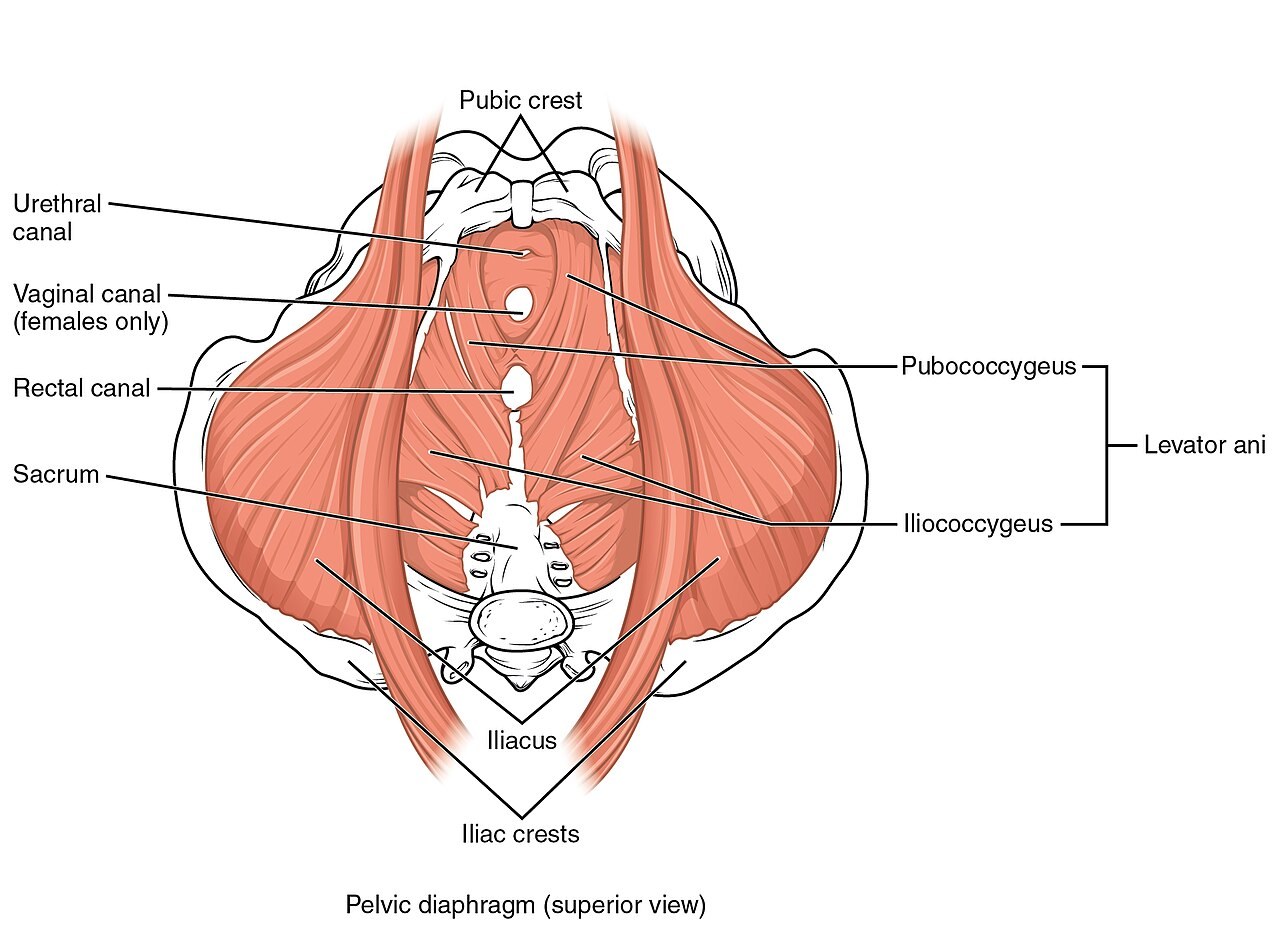
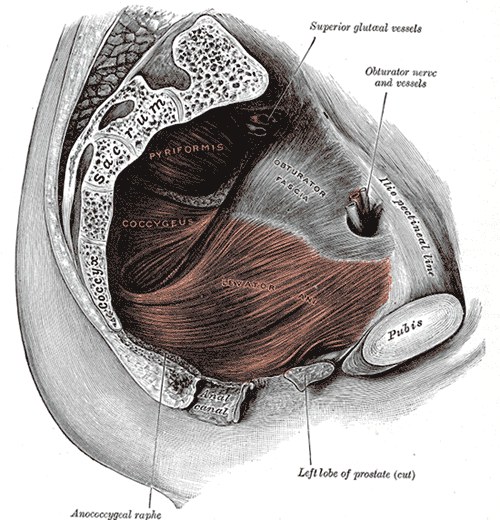
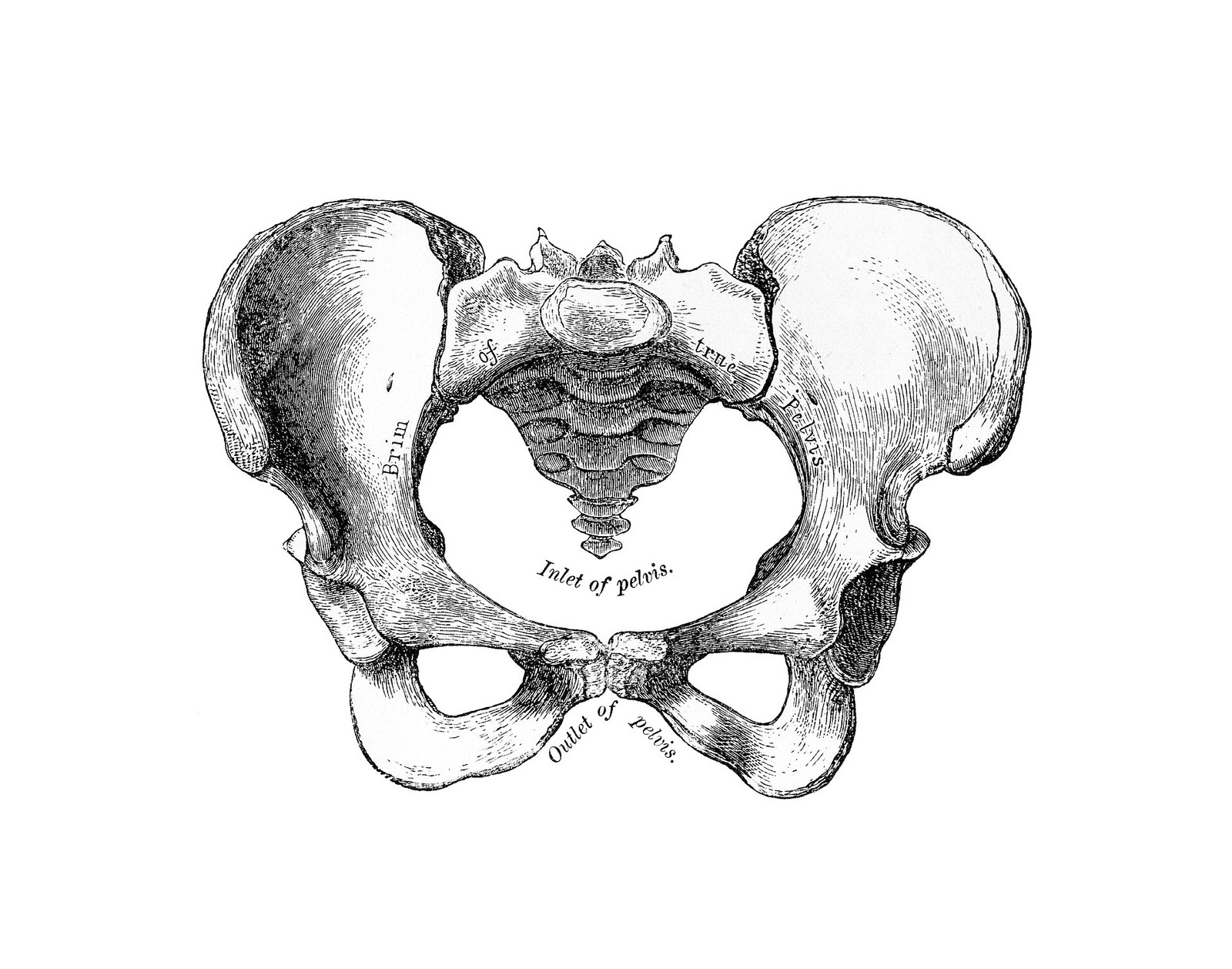
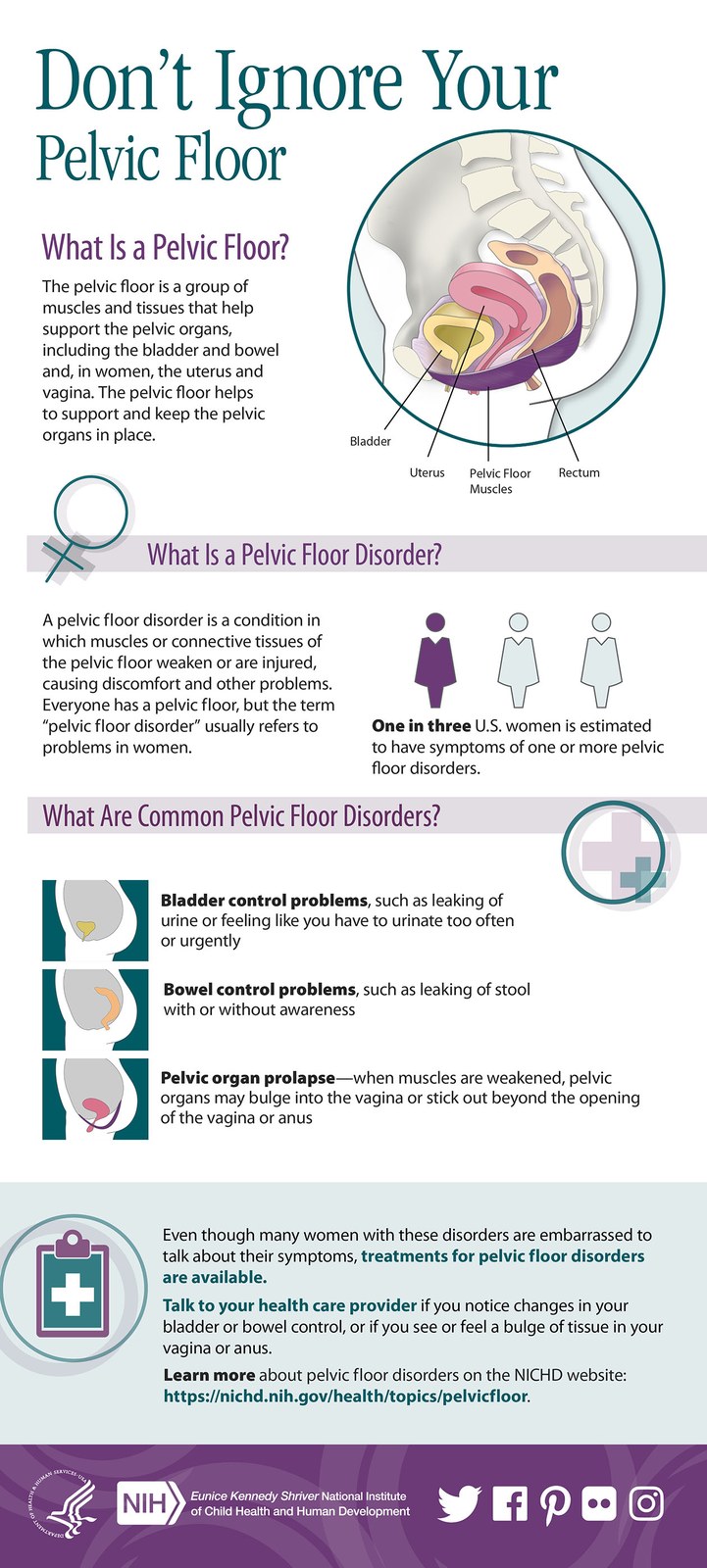
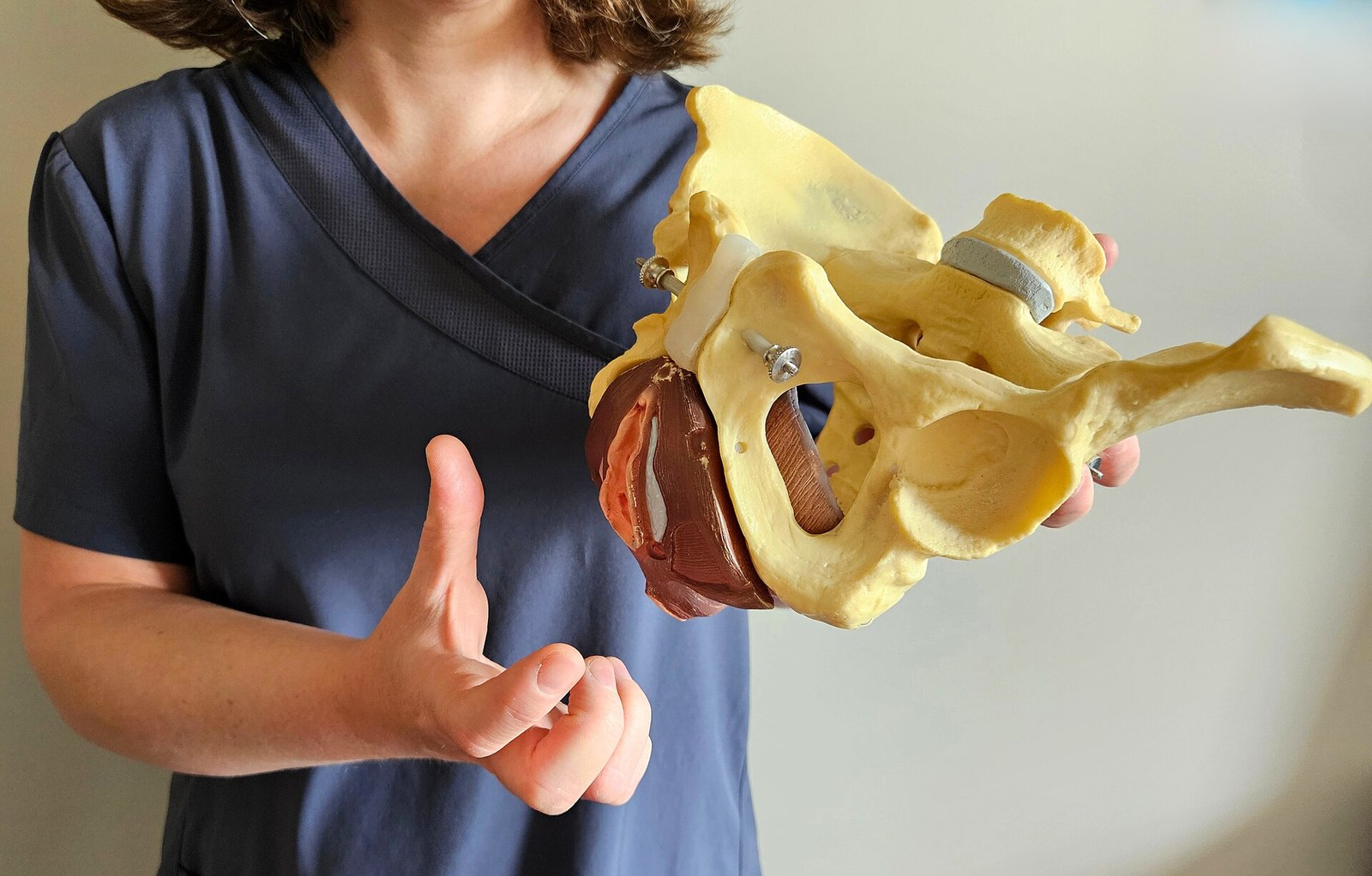
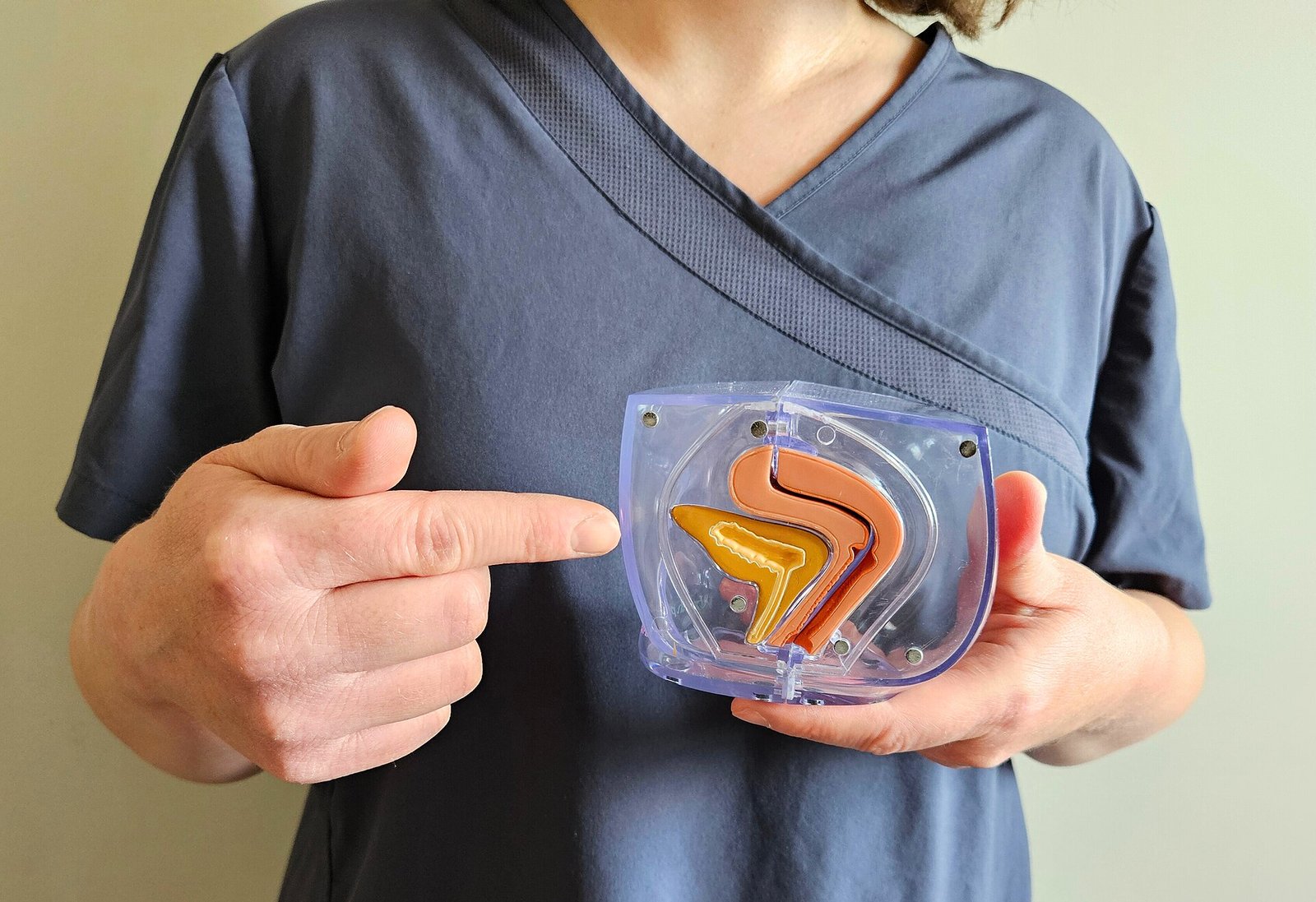
The pelvic floor is a group of muscles across the base of the pelvis. The US National Institute of Child Health and Human Development (NICHD) calls it "a sling or hammock." Together with nearby tissue, these muscles hold the bladder, the bowel and, in women, the uterus and vagina in place. The OpenStax anatomy textbook names the levator ani as the most important of them. It runs from the pubic bone to the tailbone and helps close the openings of the urethra and the anus.
Pelvic floor muscle training, often called Kegel exercises, means squeezing, holding and then relaxing these muscles on purpose. The National Institute of Diabetes and Digestive and Kidney Diseases (NIDDK) describes it as a treatment for bladder problems. The name comes from Arnold Kegel, a US gynecologist. He published a paper on exercising these muscles in 1948, according to the Embryo Project Encyclopedia at Arizona State University. He used a pressure gauge placed in the vagina to show the strength of each squeeze.
What did the trials find?
The strongest evidence is for stress incontinence. The 2018 Cochrane review was led by Dumoulin. In it, 74% of women with stress incontinence who trained said they were cured or improved. Without training, the figure was 11%. Women who trained had about 1.2 fewer leaks a day, across 7 trials and 432 women. The reviewers rated these results moderate quality. Women who trained reported better quality of life and better sexual outcomes, and side effects were rare and minor.
Pregnancy and birth were studied in a 2020 Cochrane review led by Woodley. Some pregnant women in it did not leak at the start. For them, training lowered the risk of leaking late in pregnancy by about 62%, across 6 trials and 624 women. The risk was also lower 3 to 6 months after birth, a finding the reviewers rated high certainty. For women already leaking after birth, the benefit of training was uncertain.
Pelvic organ prolapse is when pelvic organs drop from their usual place. The NHS lists heaviness or a bulge in the vagina among its signs. A 2011 Cochrane review of 6 trials found some evidence that training eased prolapse symptoms. The largest trial, POPPY, was published in The Lancet in 2014. It randomized 447 women with prolapse. After 12 months, symptom scores fell by 3.77 points with individual training and by 2.09 points without it. The adjusted difference was 1.52 points; the abstract does not say whether that is a clinically important change.
Sexual function has been studied less directly. A 2015 systematic review covered 8 trials and 1,341 women. Most of the trials reported a gain in at least one part of sexual function. Only one of those trials made sexual function its main question. A 2024 meta-analysis in the American Journal of Obstetrics and Gynecology could pool only 4 of 21 trials. It found higher scores on a standard questionnaire, the Female Sexual Function Index, and rated the certainty very low.
Where do the claims run ahead of the trials?
The trials studied women with leaking or prolapse, mostly over a few months. Claims that the same exercises reliably improve orgasm or desire go past them. The only pooled orgasm result we found comes from the 4 trials in the 2024 meta-analysis, at very low certainty.
Devices are often sold as a faster route. A 2013 Cochrane review of 23 trials and 1,806 women looked at weighted vaginal cones. Cones did better than no treatment, but the reviewers found little difference between cones and ordinary training. Training apps have been compared with written instructions in a 2024 Cochrane review, which found a possible small gain at low certainty. The NHS says there is "not much good evidence" that biofeedback adds a significant benefit.
Vaginal jade eggs are often described as an ancient Chinese practice. In a 2019 paper, Gunter and Parcak searched the online databases of four US collections of Chinese art and archaeology. Together they held more than 5,000 jade objects. They found no evidence for that claim. Their paper looked at the history only, not at any effect on the body.
Doing the exercise correctly was also studied. In a 1991 study of 47 women given brief spoken instructions, only 49% made a correct squeeze. A quarter used a method that could make leaking worse.
What did the training programs look like?
The 2018 Cochrane reviewers reported considerable variation in what the training programs contained and how long they lasted. The NHS describes the program it offers for incontinence. It lasts at least 3 months, with "a minimum of 8 muscle contractions at least 3 times a day." It says a specialist, often a physiotherapist (a physical therapist in the US), first checks whether and how strongly a woman can squeeze. The POPPY trial tested training planned for each woman individually.
NIDDK says improvement in bladder control may not show "until after 3 to 6 weeks" of daily practice. The 2024 Cochrane review of 63 trials and 4,920 women compared ways of delivering the training. Group sessions and individual sessions gave about the same results, at moderate certainty. Training aimed directly at the pelvic floor did better than general exercise, at low certainty. The reviewers said better trials are needed to settle how much exercise gives the most benefit.
The trials mostly enrolled adult women with leaking, women who were pregnant or had recently given birth, or women with prolapse. Men were studied after prostate surgery. A 2015 Cochrane review of 50 trials and 4,717 men found the evidence conflicting and the benefit uncertain.
What do the warnings say?
NIDDK says the exercises "aren't a good option for everyone" and that overdoing them can lead to straining on the toilet. It also warns against doing them regularly while passing urine. In 9 trials of the 2024 Cochrane review, 6% of women had side effects. Most came with devices placed in the vagina or rectum. A 2012 Mayo Clinic review describes a different problem, a pelvic floor that cannot relax. It can cause pain and trouble with the bladder, the bowel and sex. The trials above enrolled women with leaking or prolapse, not this problem. The NHS says a lump or bulge in or around the vagina is a reason to see a doctor.
Questions to Ask Your Doctor
- Is my leaking stress incontinence, urge incontinence or a mix of both?
- Could a pelvic floor physical therapist check whether I am squeezing the right muscles?
- Is there any sign that my pelvic floor is too tight rather than too weak?
- Could this pressure or bulge be a prolapse, and how would we check?
- Could pain during sex be connected to my pelvic floor muscles?
Questions People Ask
How long do pelvic floor exercises take to work?
The programs in the trials ran for months, not days. NIDDK says bladder control may not improve until after 3 to 6 weeks of daily practice. The NHS program lasts at least 3 months. POPPY measured symptoms after 12 months. How long benefits last after training stops has not been well studied, according to the 2018 Cochrane review.
Do pelvic floor exercises help after having a baby?
For prevention, the 2020 Cochrane review found that training in pregnancy lowered leaking in the months after birth. For women already leaking after birth, it found the benefit of starting training then uncertain, at low certainty. It also found that offering training to every new mother, leaking or not, was unlikely to lower leaking across the group. Few trials measured bowel leakage.
Can men do pelvic floor exercises?
Men also have pelvic floor muscles, including the levator ani, and men have been studied, mostly after prostate cancer surgery. The 2015 Cochrane review of 50 trials and 4,717 men found results that disagreed with each other. One large trial with one-to-one sessions found no difference. The reviewers concluded that the value of training for leaking after prostate surgery remains uncertain.
Are vaginal weights or cones better than plain exercises?
The 2013 Cochrane review found little difference between weighted cones and pelvic floor training without them. Cones did better than no treatment. Many of the cone trials were small, and some lost many women before the end. The NHS lists cones as an option and notes that some women find them uncomfortable.
Pelvic floor training is one of several topics covered in our overview, Sexual health basics, from the research.
Pictures and credits
In pictures





Where this comes from
Sources
- Dumoulin C, Cacciari LP, Hay-Smith EJC. Pelvic floor muscle training versus no treatment, or inactive control treatments, for urinary incontinence in women. Cochrane Database of Systematic Reviews, 2018. 31 trials, 1,817 women; stress incontinence cure 56% vs 6% (high quality); cured or improved 74% vs 11%; leaks per day; sexual outcomes; side effects rare and minor
- Woodley SJ, Lawrenson P, Boyle R, et al. Pelvic floor muscle training for preventing and treating urinary and faecal incontinence in antenatal and postnatal women. Cochrane Database of Systematic Reviews, 2020. Training in pregnancy and after birth: lower risk of leaking (RR 0.38, 6 trials, 624 women; RR 0.71 at 3 to 6 months after birth); uncertain benefit as treatment after birth
- Hagen S, Stark D. Conservative prevention and management of pelvic organ prolapse in women. Cochrane Database of Systematic Reviews, 2011. 6 trials; some evidence that training eases prolapse symptoms and severity
- Hagen S, Stark D, Glazener C, et al. Individualised pelvic floor muscle training in women with pelvic organ prolapse (POPPY): a multicentre randomised controlled trial. The Lancet, 2014. 447 women; symptom score fell 3.77 vs 2.09 points at 12 months
- Ferreira CH, Dwyer PL, Davidson M, et al. Does pelvic floor muscle training improve female sexual function? A systematic review. International Urogynecology Journal, 2015. 8 trials, 1,341 women; only one trial had sexual function as its main outcome
- Jorge CH, Bo K, Chiazuto Catai C, et al. Pelvic floor muscle training as treatment for female sexual dysfunction: a systematic review and meta-analysis. American Journal of Obstetrics and Gynecology, 2024. 4 of 21 trials pooled; higher FSFI scores, including orgasm; very low certainty
- Hay-Smith EJC, Starzec-Proserpio M, Moller B, et al. Comparisons of approaches to pelvic floor muscle training for urinary incontinence in women. Cochrane Database of Systematic Reviews, 2024. 63 trials, 4,920 women; group vs individual about the same; direct training better than general exercise; apps vs written instructions; side effects in 6%, mostly with devices
- Herbison GP, Dean N. Weighted vaginal cones for urinary incontinence. Cochrane Database of Systematic Reviews, 2013. 23 trials, 1,806 women; cones better than no treatment, little difference from pelvic floor training
- Bump RC, Hurt WG, Fantl JA, Wyman JF. Assessment of Kegel pelvic muscle exercise performance after brief verbal instruction. American Journal of Obstetrics and Gynecology, 1991. 47 women; 49% made a correct squeeze after brief spoken instruction; 25% used a method that could promote leaking
- Anderson CA, Omar MI, Campbell SE, et al. Conservative management for postprostatectomy urinary incontinence. Cochrane Database of Systematic Reviews, 2015. 50 trials, 4,717 men; conflicting evidence, uncertain benefit after prostate surgery
- Faubion SS, Shuster LT, Bharucha AE. Recognition and management of nonrelaxing pelvic floor dysfunction. Mayo Clinic Proceedings, 2012. A pelvic floor that cannot relax: pain and bladder, bowel and sexual problems
- Gunter J, Parcak S. Vaginal jade eggs: ancient Chinese practice or modern marketing myth? Female Pelvic Medicine and Reconstructive Surgery, 2019. More than 5,000 jade objects in four collections; no evidence of the claimed ancient use
- Kegel Exercises. National Institute of Diabetes and Digestive and Kidney Diseases (NIH), 2021. What the exercises are; 3 to 6 weeks; not for everyone; overdoing them can cause straining
- About Pelvic Floor Disorders (PFDs). Eunice Kennedy Shriver National Institute of Child Health and Human Development (NIH), 2020. The pelvic floor as a sling of muscles holding the pelvic organs
- Urinary incontinence: non-surgical treatment. NHS, 2023. At least 3 months, at least 8 contractions 3 times a day; specialist assessment; biofeedback; cones
- Pelvic organ prolapse. NHS, 2025. Signs of prolapse; a lump or bulge in or around the vagina is a reason to see a GP
- Betts JG, et al. Anatomy and Physiology 2e, section 11.4: Axial muscles of the abdominal wall and thorax. OpenStax, Rice University, 2022. The levator ani as the main pelvic floor muscle and its sphincter role
- Johnson M. Arnold Henry Kegel (1894-1972). Embryo Project Encyclopedia, Arizona State University, 2024. Kegel's 1948 paper and the vaginal pressure gauge (perineometer)
The Healing Spot reports published research for general information. It is not medical advice and does not replace a doctor, who knows your history. Talk to a qualified clinician before you start, stop or change any treatment, supplement or practice. If you think you may have a medical emergency, call 911 or your local emergency number.