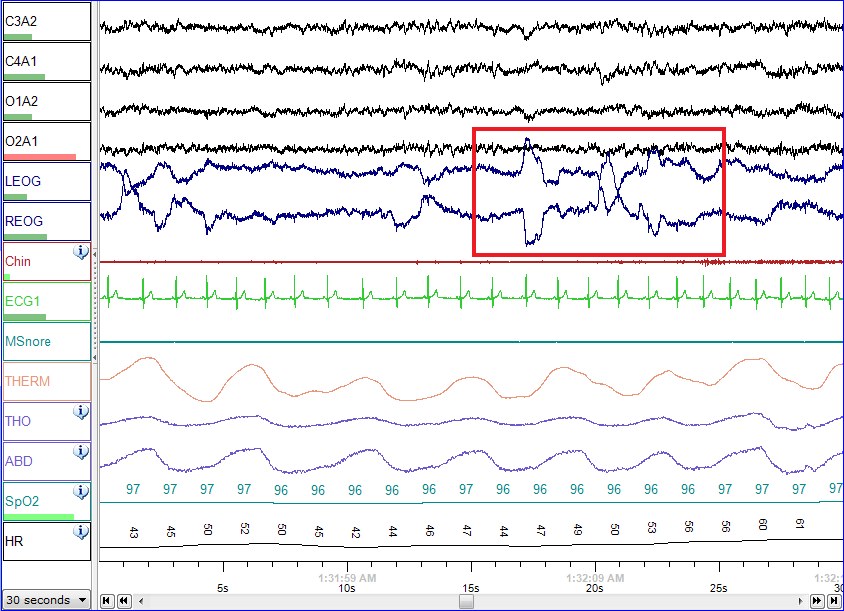
Is lucid dreaming real, and what have sleep labs recorded? A lucid dream is one in which you know you are dreaming while the dream goes on. Since 1981, sleep labs have confirmed it by asking dreamers to signal with agreed eye movements during REM sleep.
A 2016 meta-analysis found that about 55% of people have had at least one lucid dream. A 2021 study at four labs went further: dreamers answered spoken questions from inside REM sleep. A 2012 review found that no induction method had been shown to work reliably. A 2023 review found only 4 small randomized trials for nightmares.
We rate the research Early for treating nightmares; the American Academy of Sleep Medicine lists it as "may be used." The lab recordings of lucid dreams in REM sleep are well established; what they mean for health is not.
What is a lucid dream?
LaBerge and colleagues define lucid dreaming in a 2018 paper. It means being "aware of the fact that one is dreaming while continuing to dream." Control over the dream is not part of the definition. Uncontrolled lucid dreams are more common than controlled ones, a 2020 review notes.
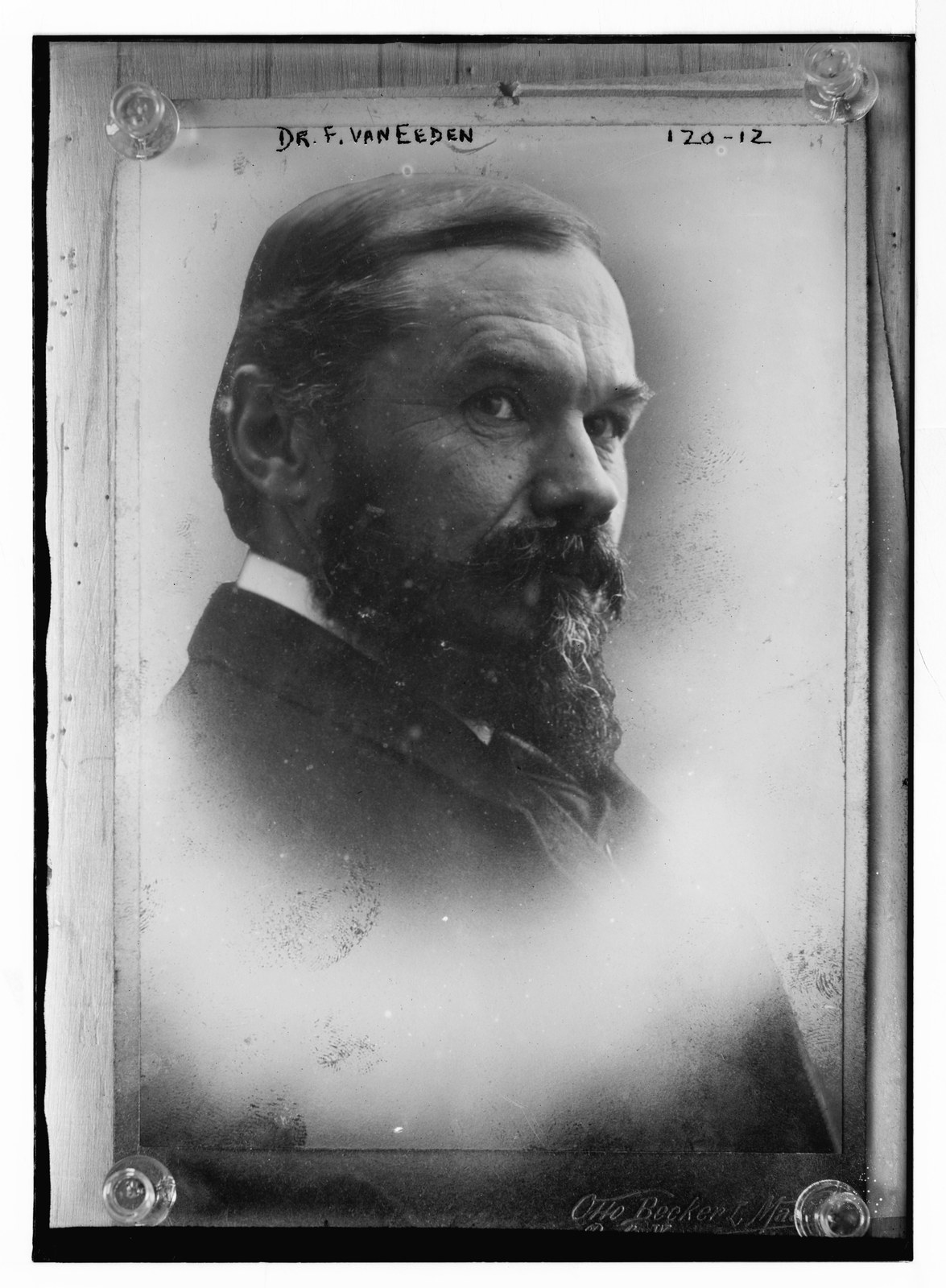
The Dutch psychiatrist and writer Frederik van Eeden named the "lucid dream" in 1913, in an account of his own dreams. A 2019 review quotes his description of a sleeper who "reaches a state of perfect awareness." The idea is older. Aristotle wrote that a sleeper can be aware that what appears "is but a dream."
Some contemplative traditions train this state on purpose. A 2020 review by Mota-Rolim and colleagues describes Tibetan Buddhist dream yoga as a meditation technique. It teaches dreamers "to recognize the dream, overcome all fears when lucid, and control the oneiric content." Practitioners also describe keeping awareness through dreamless sleep. Baird and colleagues' 2019 review reports this as the practitioners' own account.
What have sleep labs recorded?
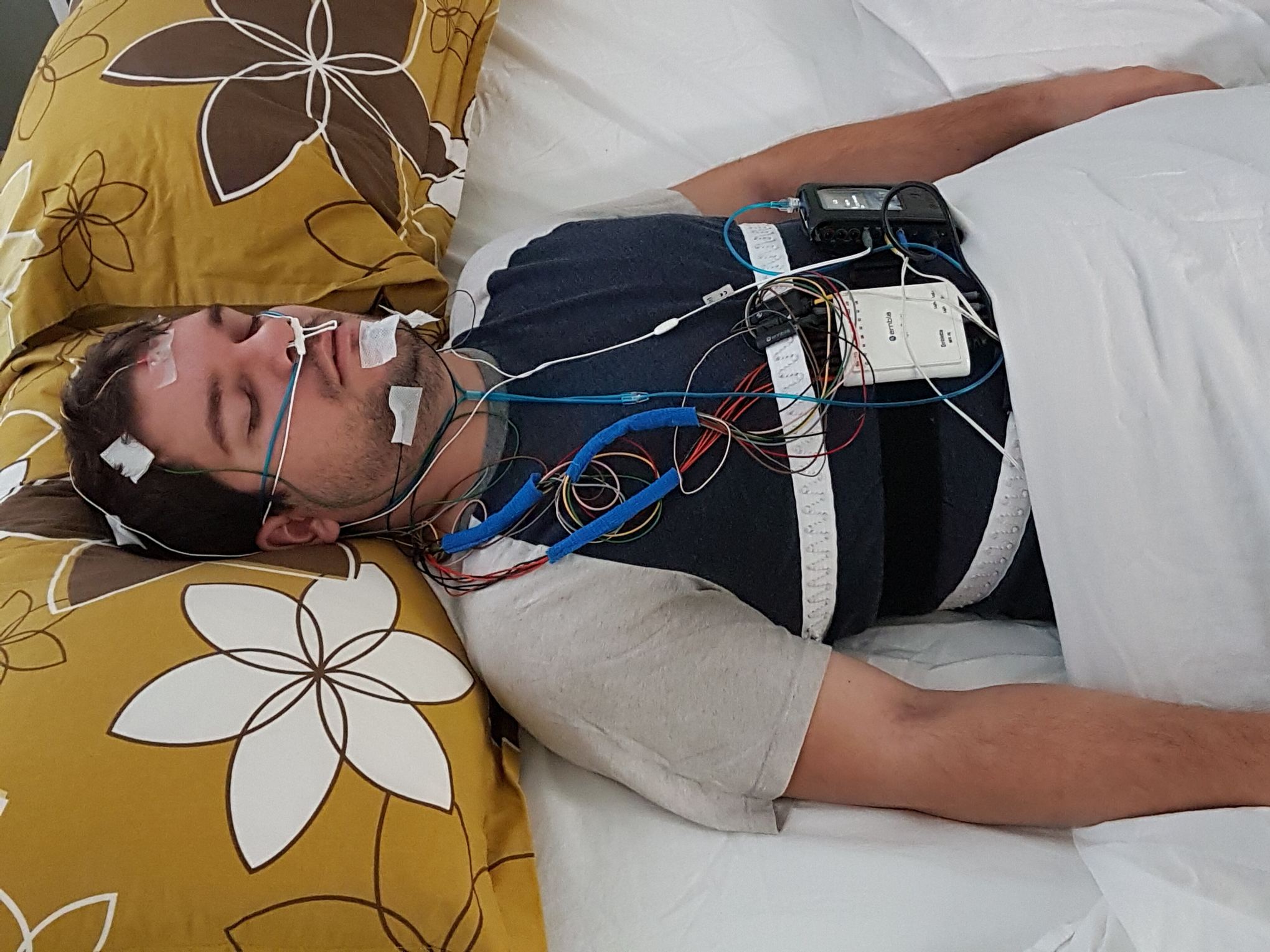
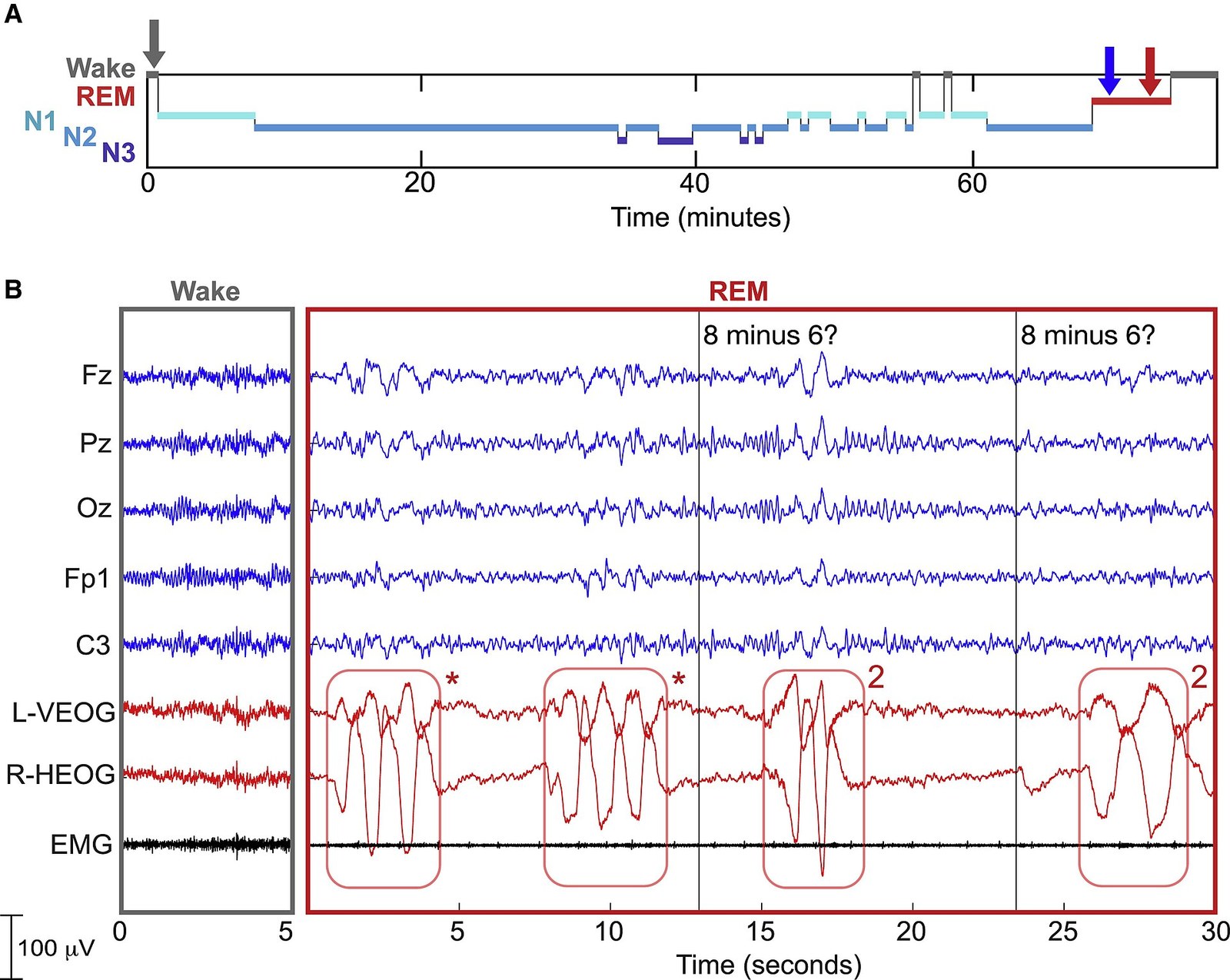
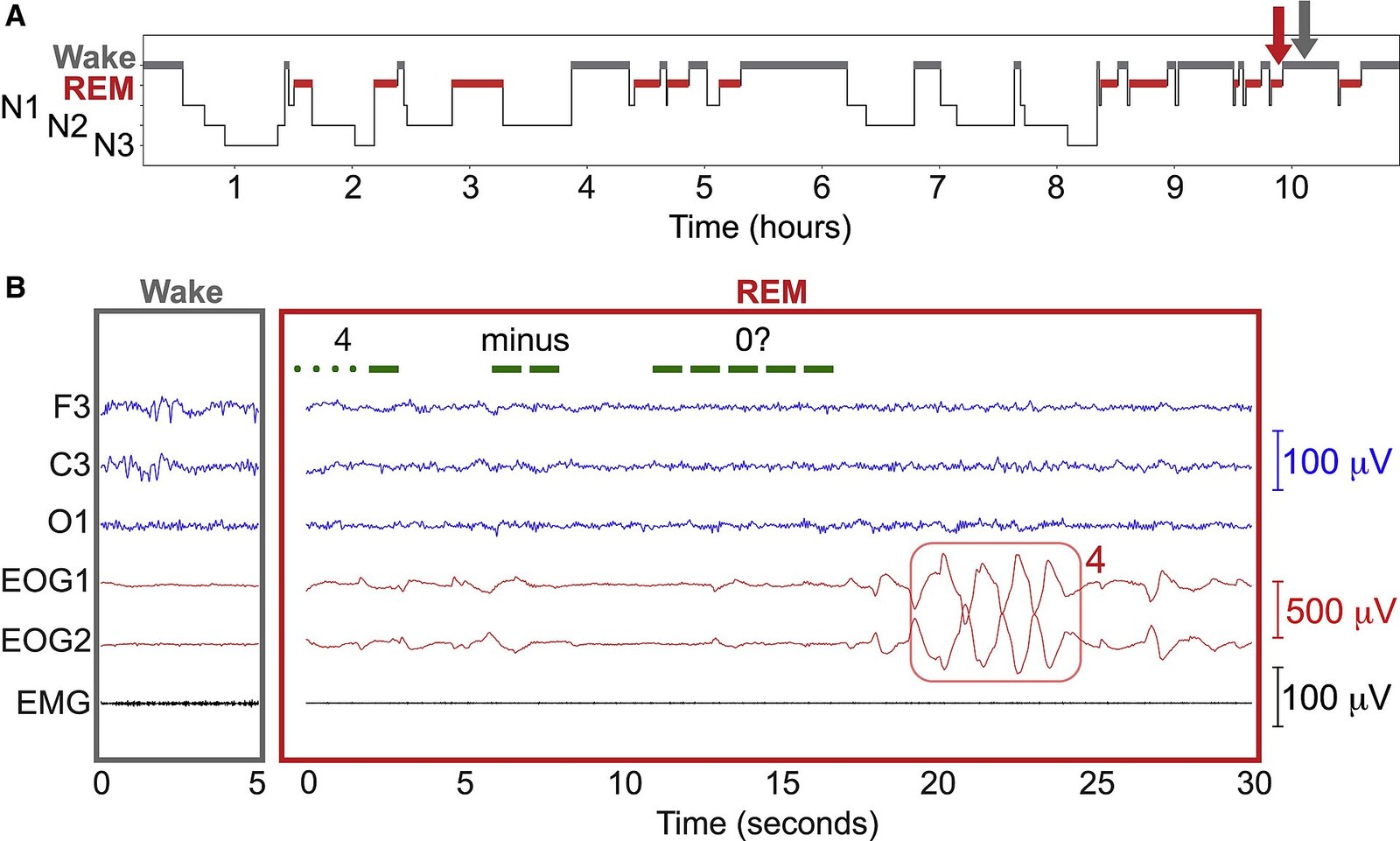
The first signals. Keith Hearne says he recorded the first agreed eye signals from a lucid dreamer. It was 12 April 1975, at the University of Hull's sleep lab. In 1981, Stephen LaBerge and colleagues at Stanford reported the same in 5 people. They signaled that they knew they were dreaming. The recordings showed "unequivocal REM sleep." The 2019 Baird review calls this left-right eye signal "the gold standard."
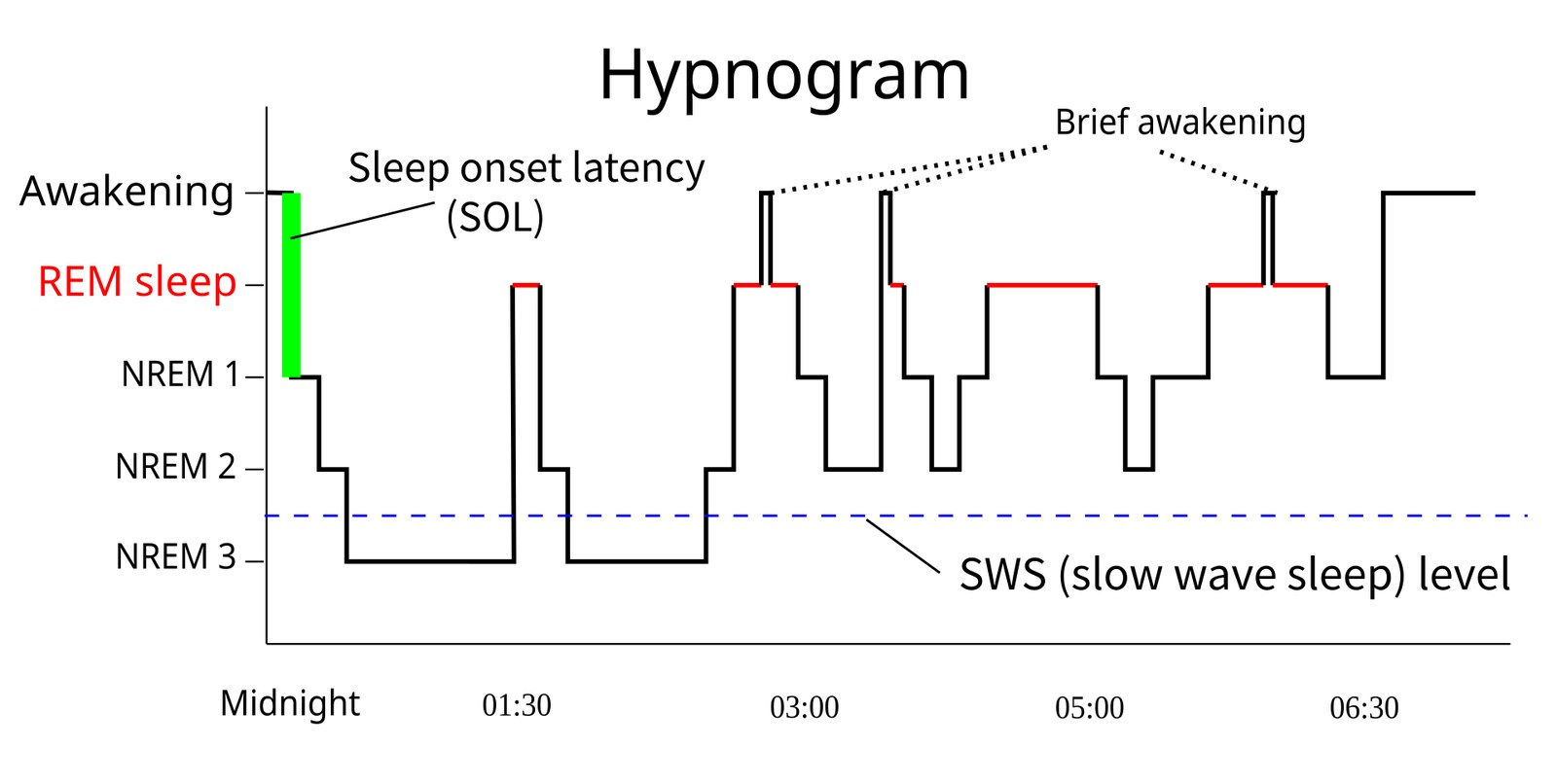
The sleep stage. A 2019 review by Baird, Mota-Rolim and Dresler calls lucid dreams "predominantly a REM sleep phenomenon." It found no reports of lucid dreams recorded in deep sleep. REM sleep during lucid dreams also showed more eye movement than usual.
The brain. A 2009 study by Voss and colleagues reported more 40 Hz brain activity at the front of the head during lucid dreams. Later reviewers noted that the comparison rested on 3 dreamers. In 2022, Baird, Tononi and LaBerge reanalyzed 14 verified lucid dreams. They concluded that the 40 Hz rise came from eye-muscle activity. A 2025 study pooling several labs found that differences at the scalp were "minimal." At the source level, it found lower beta power in right central and parietal areas instead.
A 2012 brain-imaging study recorded only one dreamer long enough to analyze. During lucid dreams, regions normally quiet in REM sleep became more active.
Talking with dreamers. In 2021, Konkoly and colleagues ran tests at four labs in the US, France, the Netherlands and Germany. They studied 36 people. During lucid REM sleep, researchers asked questions such as "8 minus 6," by voice or by flashing lights. Dreamers answered with eye movements or facial muscles.
Of 158 questions asked in verified lucid dreams, 29 got a correct answer, from 6 people. That is 18.4%. Another 3.2% were wrong, 17.7% unclear, and 60.1% got no response. The authors reported no competing interests.
How common it is. Saunders and colleagues pooled 34 studies in 2016. About 55% of people reported at least one lucid dream, and about 23% had one a month or more.
Where is lucid dreaming oversold?
The first claim is that a technique, device, mask or supplement reliably produces lucid dreams. Stumbrys and colleagues reviewed 35 studies in 2012. None of the techniques, they wrote, "were verified to induce lucid dreams reliably and consistently." In the largest home study, lucid dreams were reported on about 16% of mornings after a week of practice.
A second claim is that brain stimulation induces lucid dreams. A 2014 study reported high success rates with mild current at 25 and 40 Hz. But it counted a dream as lucid when rating scores rose, not by eye signals. A 2019 review judged its effect. The stimulation did not appear to increase lucid dreams "in the traditional sense."
A third claim is that science shows lucid dreaming is a special 40 Hz state between waking and sleep. That rests on 3 dreamers in 2009 and was disputed in 2022 and 2025.
A fourth is that lucid dreaming is a tested therapy for nightmares or PTSD. The American Academy of Sleep Medicine (AASM) says lucid dreaming therapy "may be used" for nightmare disorder. In its terms, that means the evidence is less clear either way. A 2020 review by Soffer-Dudek found no benefit shown for PTSD symptoms, and the 2006 pilot found none.
What did the induction studies test?
These are reports of what named studies gave or taught, not instructions.
A drug. In 2018, LaBerge, LaMarca and Baird tested the drug galantamine in 121 people with good dream recall. Each person had placebo, 4 mg and 8 mg on separate nights. Doses were taken in the night, combined with a waking routine and a memory technique. Participants were screened for the conditions listed below. Lucid dreams were reported on 14% of placebo nights, 27% at 4 mg and 42% at 8 mg. The trial ran inside the Lucidity Institute's own paid 8-day workshops. The study was approved by the Lucidity Institute's own ethics committee; the authors declared no competing interests. Lucid dreams were self-reported, not recorded in a lab.
Memory and waking techniques. The International Lucid Dream Induction Study, published in 2020, followed 355 people for two weeks at home. Mornings with a reported lucid dream rose from 5.3% to 15.8%. Groups using a technique called MILD averaged 16.5%. Dropout was high, and all results were self-reported.
Sounds during sleep. Northwestern researchers pair a sound with training before sleep, then play it during REM. A 2024 study moved this from the lab to a smartphone at home. Lucid dreams rose compared with control nights.
Nightmares. A 2006 pilot trial studied 23 people with nightmares. Some had one 2-hour lesson in lucid dreaming, alone or in a group; others waited. Nightmares became less frequent in both lesson groups. Sleep quality and PTSD symptoms did not change. The authors noted that "lucidity was not necessary" for the drop.
A 2023 review found 4 randomized trials, 2 case series and 5 case reports. Most reported fewer nightmares, with "limited internal validity."
What do the warnings say?
We found only two studies that recorded side effects or sleep quality: the galantamine trial and the 2020 home study. In the galantamine trial, 5 people had trouble falling back to sleep and 5 had nausea or stomach upset. It excluded people with asthma, heart rhythm problems, severe mental illness or on beta-blockers. Vallat and Ruby wrote in 2019 that induction methods "alter sleep integrity" by waking people at night. A 2018 study of 187 students linked deliberate induction to rising dissociation over 2 months. A 2022 analysis tied sleep paralysis to failed attempts.
Questions to Ask Your Doctor
- Could my nightmares be linked to a sleep disorder or to trauma that needs its own treatment?
- Is breaking up my sleep at night a problem with my health or medicines?
- Could a medicine or supplement I take be affecting my dreams?
- Are my sleep paralysis episodes worth a sleep study?
Questions People Ask
Can scientists talk to people while they are dreaming?
In a limited way, yes. In the 2021 four-lab study, dreamers in verified lucid REM sleep heard or saw simple questions. They answered with eye movements or facial muscle twitches. Correct answers came in 18.4% of attempts, from 6 of the 36 people. Participants signaled lucidity in 26% of 57 sessions. In ordinary REM sleep, only 1 of about 379 questions got a correct answer.
Is lucid dreaming bad for your sleep?
The research does not settle this. A survey of 1,824 people linked frequent lucid dreams with poorer sleep quality, but it could not show cause. In the 2020 home study, sleep quality was slightly higher on nights when a technique worked. Vallat and Ruby point to the methods, which often involve waking up during the night.
Can lucid dreaming stop nightmares?
Small trials report fewer nightmares after lucid dreaming lessons. In one 2006 pilot, the drop happened even in people who did not become lucid. The AASM lists it as an option that "may be used" for nightmare disorder. It names image rehearsal therapy, a different method, as its recommended treatment.
Who has lucid dreams most often?
About 23% of people report one a month or more, according to the 2016 meta-analysis. A 2026 study found more lucid dreams in people with psychotic disorders than in controls, though it could not say why.
More from the Spiritual hub: what eight-week meditation programs were found to change and the Spiritual Wellness page.
Pictures and credits
In pictures





Where this comes from
Sources
- Baird B, Mota-Rolim SA, Dresler M. The cognitive neuroscience of lucid dreaming. Neuroscience and Biobehavioral Reviews, 2019. Definition; van Eeden 1913 and Aristotle; eye-signal method; REM sleep; the 2009 comparison on 3 dreamers; the 2014 stimulation results judged
- La Berge SP, Nagel LE, Dement WC, Zarcone VP Jr. Lucid dreaming verified by volitional communication during REM sleep. Perceptual and Motor Skills, 1981. 5 people signaled during unequivocal REM sleep
- Hearne K. Science (including Lucid Dream research). keithhearne.com. The researcher's own account of the first eye signals, 12 April 1975, Hull
- Konkoly KR, et al. Real-time dialogue between experimenters and dreamers during REM sleep. Current Biology, 2021. 4 labs, 36 people; 158 questions, 29 correct from 6 people, 3.2% wrong, 17.7% ambiguous, 60.1% no response; one narcolepsy participant
- Saunders DT, Roe CA, Smith G, Clegg H. Lucid dreaming incidence: a quality effects meta-analysis of 50 years of research. Consciousness and Cognition, 2016. About 55% at least once, 23% monthly
- Stumbrys T, Erlacher D, Schadlich M, Schredl M. Induction of lucid dreams: a systematic review of evidence. Consciousness and Cognition, 2012. 35 studies; no technique verified to work reliably
- Voss U, Holzmann R, Tuin I, Hobson JA. Lucid dreaming: a state of consciousness with features of both waking and non-lucid dreaming. Sleep, 2009. The 40 Hz frontal finding
- Baird B, Tononi G, LaBerge S. Lucid dreaming occurs in activated rapid eye movement sleep, not a mixture of sleep and wakefulness. Sleep, 2022. 14 lucid dreams reanalyzed; the 40 Hz rise explained by eye-muscle activity
- Demirel C, et al. Electrophysiological Correlates of Lucid Dreaming: Sensor and Source Level Signatures. Journal of Neuroscience, 2025. Pooled multi-lab EEG; minimal sensor-level differences; source-level changes
- Dresler M, et al. Neural correlates of dream lucidity obtained from contrasting lucid versus non-lucid REM sleep: a combined EEG/fMRI case study. Sleep, 2012. One dreamer analyzed; regions normally quiet in REM more active
- Voss U, et al. Induction of self awareness in dreams through frontal low current stimulation of gamma activity. Nature Neuroscience, 2014. The 2014 stimulation claim
- LaBerge S, LaMarca K, Baird B. Pre-sleep treatment with galantamine stimulates lucid dreaming: a double-blind, placebo-controlled, crossover study. PLOS ONE, 2018. 121 people; 14%, 27%, 42%; workshop setting and ethics committee; side effects; exclusions
- Adventure-Heart DJ (Aspy). Findings from the International Lucid Dream Induction Study. Frontiers in Psychology, 2020. 355 completers; 5.3% to 15.8%; MILD 16.5%; sleep quality; limitations
- Konkoly KR, Whitmore NW, Mallett R, Mazurek CY, Paller KA. Provoking lucid dreams at home with sensory cues paired with pre-sleep cognitive training. Consciousness and Cognition, 2024. Sound cues moved to a smartphone at home; more lucidity than control nights
- Spoormaker VI, van den Bout J. Lucid dreaming treatment for nightmares: a pilot study. Psychotherapy and Psychosomatics, 2006. 23 people; fewer nightmares; no change in sleep quality or PTSD; lucidity not necessary
- Ouchene R, et al. The effectiveness of lucid dreaming therapy in patients with nightmares: a systematic review. L'Encephale, 2023. 4 randomized trials and case reports; limited internal validity
- Morgenthaler TI, et al. Position paper for the treatment of nightmare disorder in adults: an American Academy of Sleep Medicine position paper. Journal of Clinical Sleep Medicine, 2018. Lucid dreaming therapy may be used for nightmare disorder; image rehearsal therapy recommended
- Soffer-Dudek N. Are lucid dreams good for us? Are we asking the right question? A call for caution in lucid dream research. Frontiers in Neuroscience, 2020. Control not part of lucidity; no PTSD benefit shown
- Vallat R, Ruby PM. Is it a good idea to cultivate lucid dreaming? Frontiers in Psychology, 2019. Induction methods alter sleep integrity; the survey of 1,824 people
- Aviram L, Soffer-Dudek N. Lucid dreaming: intensity, but not frequency, is inversely related to psychopathology. Frontiers in Psychology, 2018. 187 students; deliberate induction predicted rising dissociation over 2 months
- Mallett R, Sowin L, Raider R, Konkoly KR, Paller KA. Benefits and concerns of seeking and experiencing lucid dreams: benefits are tied to successful induction and dream control. Sleep Advances, 2022. Sleep paralysis tied to failed induction attempts
- Mota-Rolim SA, Bulkeley K, Campanelli S, et al. The Dream of God: How Do Religion and Science See Lucid Dreaming and Other Conscious States During Sleep? Frontiers in Psychology, 2020. Tibetan dream yoga in the tradition's terms
- Soffer-Dudek N, et al. Hybrid sleep-wake states in psychosis. International Journal of Clinical and Health Psychology, 2026. More lucid dreams in people with psychotic disorders than controls; correlational
The Healing Spot reports published research for general information. It is not medical advice and does not replace a doctor, who knows your history. Talk to a qualified clinician before you start, stop or change any treatment, supplement or practice. If you think you may have a medical emergency, call 911 or your local emergency number.